Why Kadamba Plateau is North Goa’s Most Strategic Commercial Investment Zone in 2026
Goa is no longer just a tourism story. The commercial real estate landscape in North Goa has shifted decisively over the past three years, driven by infrastructure that has fundamentally altered the investment calculus. At the centre of this shift sits Kadamba
Goa is no longer just a tourism story. The commercial real estate landscape in North Goa has shifted decisively over the past three years, driven by infrastructure that has fundamentally altered the investment calculus. At the centre of this shift sits Kadamba Plateau — a zone that serious investors have been quietly accumulating positions in, while most of the market is still catching up.
The Infrastructure Case: Why Goa, Why Now
The opening of Mopa International Airport (officially Manohar International Airport) changed the geography of North Goa investment. A second international airport — operational and expanding — means North Goa is no longer a seasonal, single-access market. Year-round connectivity to Mumbai, Delhi, Bengaluru, and direct international routes has created a sustained demand floor that did not exist before.
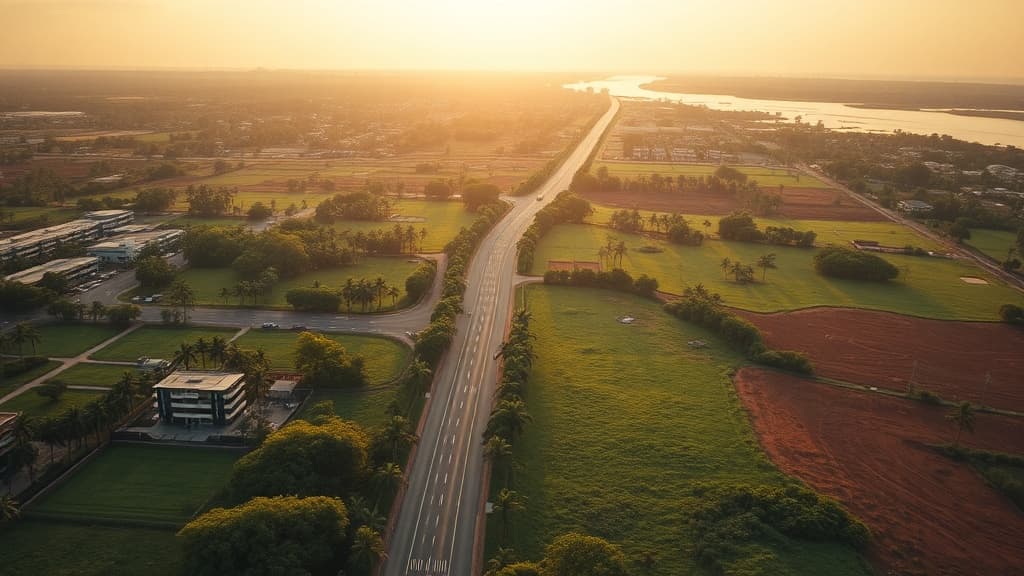
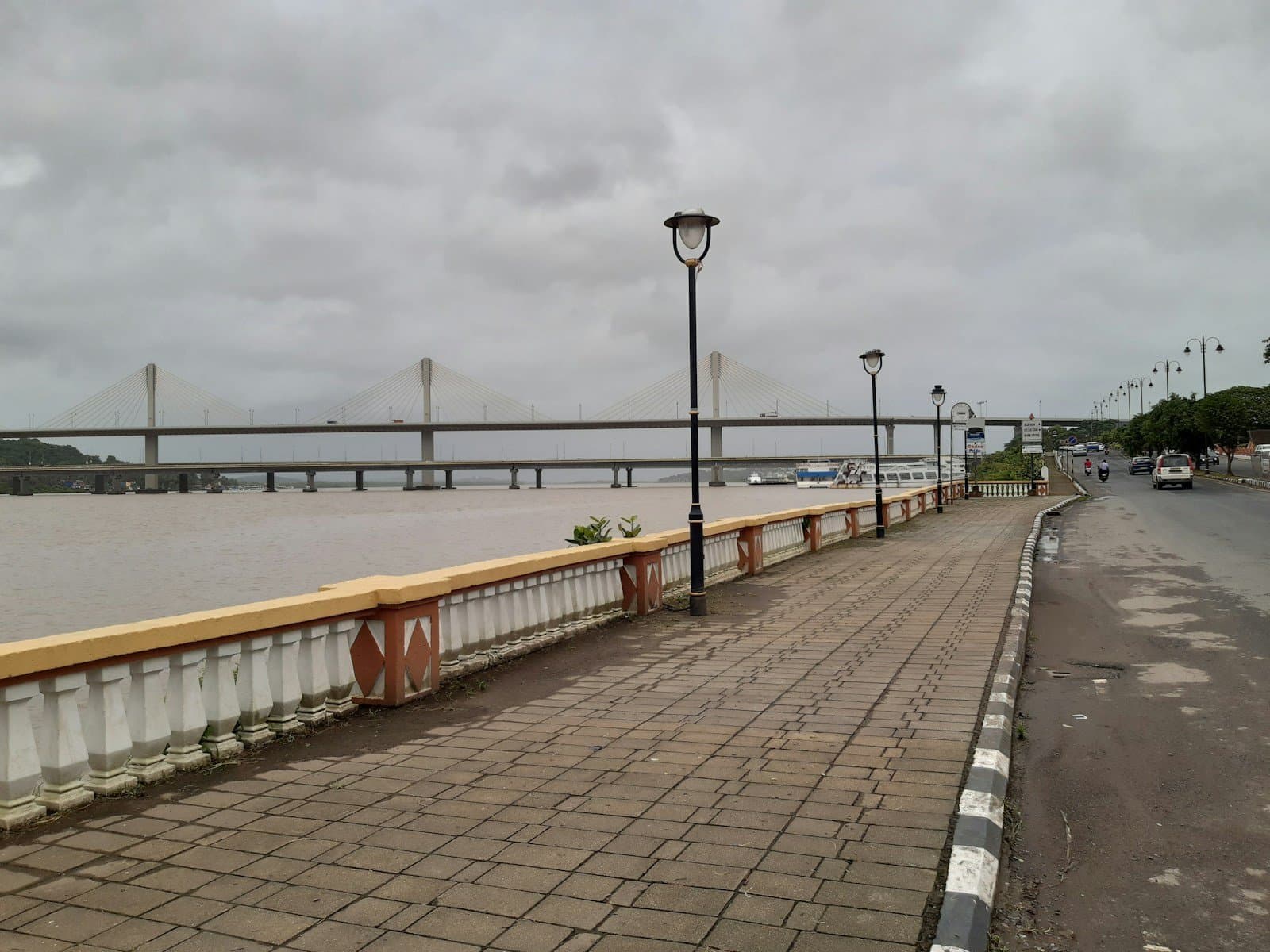
Add to this the ongoing NH-66 upgrades, the improved Panaji–Mapusa corridor, and the state government’s active push to develop Kadamba Plateau as a designated commercial and administrative zone, and the fundamentals are unusually clear. This is infrastructure-led appreciation — the most reliable kind.
What Makes Kadamba Plateau Different
Kadamba Plateau is not a speculative fringe play. It is a government-classified commercial zone adjacent to the Kadamba Bus Terminal — the largest in Goa — and within easy reach of Panaji, the state capital. The zone benefits from:
- Designated commercial classification under Goa’s regional plan, meaning permitted uses are clear and development approvals are more straightforward than in mixed-use or conversion zones
- Direct connectivity to the Panaji–Mapusa highway and proximity to NH-66, the arterial road linking Goa to Mumbai and Mangalore
- Proximity to Mopa Airport — approximately 35 kilometres, making it viable for business travellers needing both city access and airport proximity
- Established footfall from the Kadamba Terminal itself, which processes significant daily passenger and commercial traffic
For retail and commercial operators, footfall is not a projection here — it exists today. That matters when underwriting a commercial investment.
What the Market Offers at This Corridor
The commercial opportunity at Kadamba Plateau currently spans two distinct asset types: built commercial shops and land banking positions.
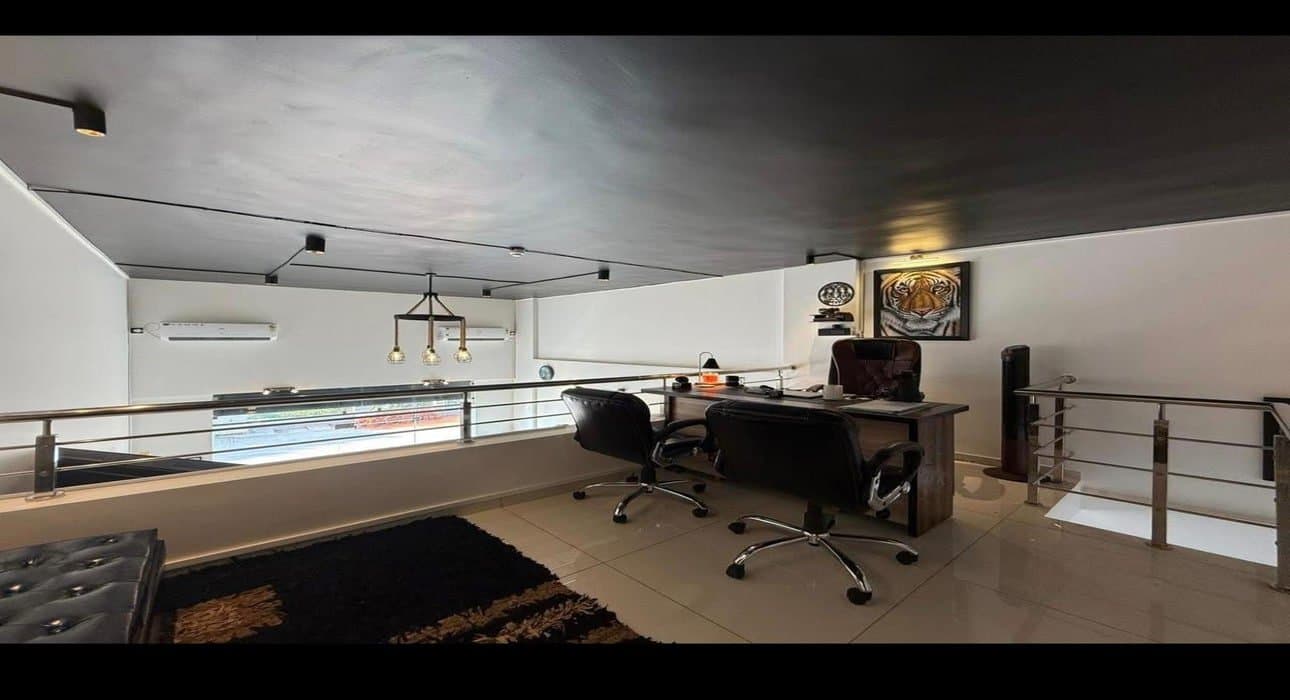
On the built side, verified inventory includes commercial shop units at 108 Sq Mt (₹1.75 Cr) and 149 Sq Mt (₹2.46 Cr). These are Grade-A commercial spaces in a zone with designated permitted use — a meaningful distinction in a market where many commercial properties carry zoning ambiguity. At these price points, the per-square-metre value stacks up well against comparable commercial product in Panaji or Mapusa, where supply is constrained and older inventory dominates.
On the land side, the Kadamba Plateau settlement plot — 15,200 Sq Mt — represents a rare large-format commercial land position in a classified zone. Opportunities at this scale, with this classification, are genuinely scarce in North Goa. Land banking at this corridor is a medium-term thesis: as the Mopa-linked commercial ecosystem matures, plateau-adjacent land will be among the first to absorb demand from businesses seeking Panaji proximity without Panaji pricing.
The ₹1.75 Cr to ₹2.5 Cr Entry Point
For HNI investors deploying ₹1.75 Cr to ₹2.5 Cr into commercial real estate, the Kadamba Plateau shops represent a disciplined entry. The logic is straightforward:
- Built commercial asset in a designated zone — no development risk
- Existing footfall infrastructure from the terminal
- Mopa Airport appreciation tailwind — the market is still in the early innings of pricing in full connectivity benefits
- Goa’s commercial rental yields for well-located retail consistently outperform residential yields in the same micro-markets
This is not a speculative bet on an emerging corridor. Kadamba Plateau has the designation, the connectivity, and the demand base in place. The investment case is about timing — entering before broader market awareness fully prices in the Mopa effect.
Why Serious Investors Are Moving Now
Inventory in designated commercial zones in North Goa does not replenish quickly. Once a built commercial unit in a location like this is absorbed, comparable product typically takes years to come back to market. The investors who have been tracking this corridor understand that the combination of government-classified commercial zoning, Mopa connectivity, and verified inventory at sub-₹2.5 Cr entry is a window — not a permanent condition.
Goa’s commercial market has historically moved in step with major infrastructure milestones. NH-66 widening drove the first wave of corridor appreciation. Mopa is the second wave, and it is larger. Kadamba Plateau, sitting at the intersection of state-designated commercial use and Mopa-linked connectivity, is positioned to be among the primary beneficiaries.
The Broader North Goa Corridor Map
Kadamba Plateau does not sit alone. The broader commercial-investment map of North Goa in 2026 also includes the Porvorim corridor — where NHAI's ₹634-Crore elevated six-lane on NH-66 is targeting late-2026 completion, expected to materially reshape Panaji–Mapusa commercial demand; the Pernem and Tuem belt closer to Mopa Airport, where airport-led commercial and hospitality activity is concentrating; and the inland clusters around Mapusa and Bicholim where retail and service-sector demand is steadily widening. Each carries a different risk-return profile. What distinguishes Kadamba Plateau within this map is the combination of state-designated commercial classification, the Kadamba Bus Terminal's existing daily footfall, the State IT Project at Chimbel, the EDC commercial complex, and Panaji proximity — credentials that the other corridors are still in the process of assembling.
The Assessment
Kadamba Plateau is not the cheapest option in North Goa, nor is it supposed to be. It is the most credentialed commercial zone in the region — classified, connected, and carrying real footfall today. For investors who want Goa commercial exposure with the least execution risk, this is the benchmark address.
The properties currently available here — from the ₹1.75 Cr shop units to the large-format settlement plot — represent the kind of verified inventory that rarely sits on the market for long at this corridor. The window to enter at current valuations is real, but it is not indefinite.
Explore current commercial and investment listings at Listiing — Premium Property, Goa.
Frequently Asked Questions
Why is Kadamba Plateau a top commercial investment zone in North Goa?
Kadamba Plateau sits at the inland administrative periphery of Panaji in Tiswadi taluka. It hosts the Kadamba Bus Terminal (Goa's largest road-transport hub) and Goa Medical College, and is the formally-designated location for the State IT Project at Chimbel and the EDC commercial complex announced on the Patto Plaza model. Combined with its position on the Panaji–Mopa road corridor — Mopa International Airport handled over 4.6 million passengers in FY 2024-25, in excess of its 4.5 million Phase-I design capacity — this creates a dense institutional catchment that drives sustained year-round commercial demand independent of tourism cycles.
What is the commercial property price at Kadamba Plateau in 2026?
Pricing is highly unit-specific — floor plate, unit size, frontage, and tenant readiness all materially shift the number. Listiing currently carries verified Grade-A commercial shop units in the corridor at ₹1.75 Cr (108 Sq Mt) and ₹2.46 Cr (149 Sq Mt). Per-square-metre and per-square-foot rates quoted on aggregator portals are not underwriting-grade for this corridor; we share specific comparables on enquiry.
What rental yield can I expect from commercial property in North Goa?
Commercial rental yields on well-located retail in Goa have historically out-performed residential yields in the same micro-markets, and anchor-tenant leases (bank branches, pharmacies, diagnostic labs, branded retail) sit at the upper end of that spread. Actual achievable rent for any specific Kadamba Plateau unit depends on frontage, floor, tenant covenant, and lease structure — published per-square-foot rent benchmarks for the corridor are not yet stabilised and we underwrite individual units rather than rely on category averages.
How does Mopa International Airport affect North Goa real estate?
Manohar International Airport at Mopa commenced commercial operations on 5 January 2023 and handled over 4.6 million passengers in FY 2024-25 — in excess of its 4.5 million Phase-I design capacity, with the master plan envisaging expansion to 13.1 million by Phase IV. Pernem, Bicholim, and Bardez talukas, along with the broader Panaji–Mopa road corridor (which includes Kadamba Plateau), are seeing the strongest infrastructure-led commercial and hospitality interest. The NH-66 widening and the Porvorim Elevated Corridor (NHAI, ~₹634 Cr, targeting late-2026 completion) further compress road travel times across the corridor.
Is commercial property in Goa a better investment than residential?
For income-focused investors, commercial property in well-located Goa micro-markets has historically offered superior gross yield to residential in the same catchment, supported by longer lease tenures (typically 3–9 years with rent escalation clauses) and predictable cash flow. However, commercial assets require higher initial capital, carry vacancy risk between tenants, and are less liquid than residential property in the resale market. Specific yield outcomes turn on unit quality, frontage, tenant covenant, and lease structure — we underwrite unit by unit rather than rely on category yield averages.
People also ask
Quick answers on this topic.
- Is commercial property in Kadamba Plateau a good investment? +
- Yes — particularly for assets sized to use case. Kadamba Plateau has the strongest near-term commercial absorption curve in North Goa, anchored by infrastructure improvements, growing residential density, and institutional occupiers moving into the corridor.
- What is the price of commercial property at Kadamba Plateau? +
- Pricing varies by plot scale, frontage and use. Small ready-to-occupy commercial shops in the cluster trade in the ₹1.5–3 Cr range; large commercial plots trade by per-sq-mt rates that vary with location. Listiing currently has live listings across both sizes.
- What kind of commercial development is allowed on Kadamba Plateau? +
- Mixed-use commercial complexes, institutional (education and healthcare), flagship retail, and master-planned mixed-use campuses. The exact use matrix depends on the specific plot’s zoning notation.
- How is Kadamba Plateau connected to the rest of Goa? +
- NH-66 is under 10 minutes away. Panjim city is under 25 minutes. The plateau’s internal road network has been upgraded recently to handle commercial traffic. Power and water infrastructure are in place, which matters more than headline distance.
- What types of operators are setting up at Kadamba Plateau? +
- Retail (lifestyle and apparel), F&B (cafe to multi-cuisine), professional services (clinics, offices), institutional (education, healthcare), and increasingly, flagship branded retail. The mix is broadening, which is the signal that defines a maturing commercial cluster.
Have a question?
Talk to us about what you read.
If this piece raised questions about a specific property or corridor, drop us a line. Short, honest replies — that's all we do.
More in Goa Real Estate