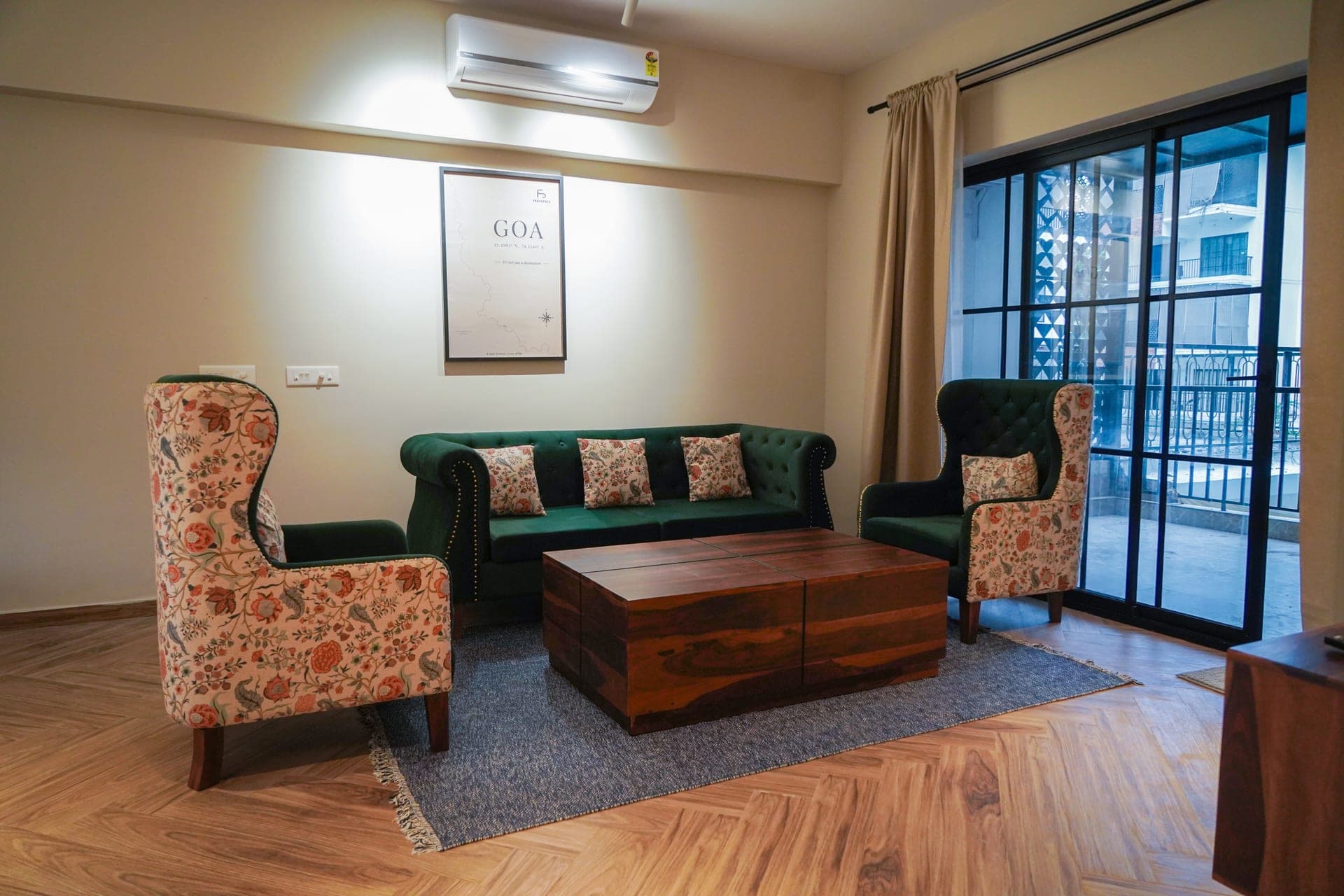
Buying Commercial Office Space in Goa: A Fitted-Office Buyer's Guide
Owning a fitted, move-in-ready office is a different decision from owning land or leasing a shell — and a different one again from renting. Here is how to think through it, and what to verify before you commit.
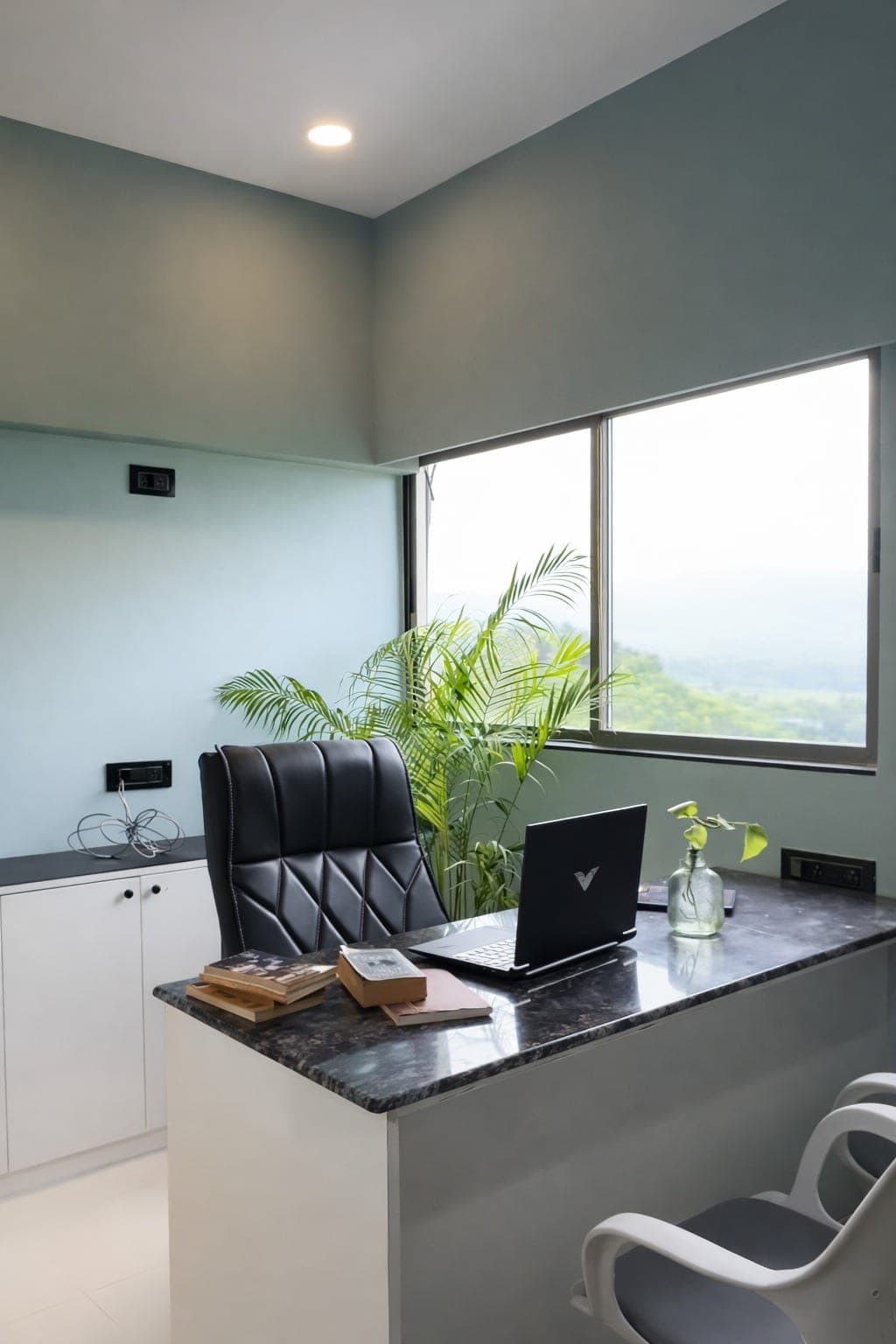
Most guidance on commercial real estate in Goa is written for the corridor investor — where to buy land, which stretch of Kadamba Plateau is developing fastest, what a plot is worth holding for. That is a different decision from the one a business owner faces when they are simply asking: should we own our own office, and if so, should it be fitted and ready, or a shell we build out ourselves? This guide is for that second buyer.
Own, Lease, or Buy Bare Shell — Three Different Decisions
Leasing keeps capital free and flexibility high, but it exposes a business to renewal uncertainty, rent escalation at the landlord's discretion, and the risk of relocating disruption if a lease is not renewed on acceptable terms. Buying a bare shell and fitting it out yourself gives full control over layout and specification, but it adds a construction project — timeline risk, contractor management, and capital tied up for months before the space is usable — on top of the acquisition itself. Buying a fitted, move-in-ready unit sits between the two: it converts a lease-equivalent operating decision into a balance-sheet asset without the fit-out project, provided the existing fit-out genuinely suits how the business will use the space.
None of these is universally correct. A business that expects to relocate or scale within a few years may be better served by leasing. A business with very specific spatial requirements may prefer the control of a bare shell. A business that wants ownership's stability and exit optionality without taking on a construction project is the buyer a fitted office is built for.
What "Fitted" Should Actually Mean
"Fitted" is doing a lot of work in most listings, and due diligence should unpack it rather than take it at face value. At minimum, verify:
- Electrical capacity and wiring condition — whether the existing load supports your equipment needs, and whether wiring has been professionally certified rather than informally extended over time.
- HVAC condition and coverage — installed air-conditioning capacity relative to the space and expected occupancy, and whether units are under any remaining manufacturer or installer warranty.
- Interior finish condition — flooring, ceiling, partition walls, and fixtures, and whether these were completed by a professional contractor with any workmanship guarantee still active, versus informal or ad hoc work.
- What is actually included — an itemised list of what transfers with the unit (fixtures, fittings, any furniture) versus what does not, in writing, before you sign.
A fitted office that has never been occupied carries less uncertainty than one being sold with an existing tenancy history — ask directly whether the space has been used, and if so, what condition it is being handed over in versus its original fit-out state.
Commercial-Specific Checks Beyond the Fit-Out
Commercial property carries diligence items a residential buyer never encounters:
- Land use and commercial conversion status. Confirm the underlying land is formally classified and approved for commercial use, and that any change-of-land-use process behind the development was completed and documented, not merely assumed.
- Parking allocation. Commercial developments typically assign parking by unit; confirm your specific allocation in writing rather than relying on general availability on site.
- Society or maintenance structure. Commercial complexes are usually governed by their own maintenance and society arrangement, distinct from residential norms — understand what it covers, how charges are set, and who has a say in major decisions.
- Documentation equivalent to carpet-area disclosure. Residential buyers have RERA's carpet-area standard to anchor space claims; commercial buyers should ask for the same clarity — a clear, verifiable area figure and floor plan, not a vague built-up number.
Owning as a Business Decision, Not Just a Property Decision
For a business owner, an owned office is a balance-sheet asset that removes lease-renewal exposure and gives the business control over its own space — worth weighing against the flexibility a lease preserves. It also creates exit optionality that a lease does not: an owned unit can be sold, or leased out to another tenant, if the business's own space needs change, in a way a leasehold interest generally cannot replicate. Listiing's own IN22611C listing — a fitted office with a private terrace on Kadamba Plateau — is a real example of what this category looks like in practice: an already-completed, ready-to-occupy unit rather than land to build on or a lease to negotiate.
A Note for Buyers
The right structure — lease, bare shell, or fitted purchase — depends on how settled your space needs are and how much you value control versus flexibility, not on which option sounds most impressive. A fitted office earns its place when a business wants ownership's stability without taking on a construction project, and due diligence on exactly what "fitted" includes is what turns that decision from a gamble into a sound one. If you are exploring commercial space in Goa, browse the current listings at https://listiing.com/property/ or reach out and we will walk you through what to verify on any specific unit.
Frequently Asked Questions
Should a business own or lease its office space in Goa?
It depends on how settled the business's space needs are. Leasing preserves flexibility but exposes the business to renewal uncertainty and rent decisions outside its control. Owning converts an operating cost into a balance-sheet asset with exit optionality, but suits a business with reasonably stable, long-term space requirements rather than one expecting to relocate or scale quickly.
What does "fitted" actually mean in a commercial listing?
It should mean the electrical system, HVAC, and interior finishes are already complete and move-in ready, but the term varies by listing. Buyers should verify electrical capacity and certification, HVAC condition and any remaining warranty, the quality and condition of interior finishes, and get a written, itemised list of exactly what transfers with the unit before signing.
What should I check before buying a fitted office versus a bare shell?
Beyond the fit-out itself, confirm the land's commercial-use classification and conversion documentation, your specific parking allocation in writing, the maintenance or society structure governing the complex, and get a clear, verifiable area figure and floor plan rather than a vague built-up number.
Is buying a bare shell cheaper than a fitted office in the long run?
Not necessarily simpler, even if the acquisition itself differs. A bare shell adds a construction project on top of the purchase — contractor management, fit-out timeline risk, and capital tied up before the space is usable — which a fitted, move-in-ready unit avoids entirely.
What is an example of a fitted commercial office listing in Goa?
Listiing's IN22611C listing — a fitted office unit with a private terrace on Kadamba Plateau, North Goa — is a real example of this category: an already-completed, ready-to-occupy space rather than land to build on or a lease to negotiate.
People also ask
Quick answers on this topic.
- Should a business own or lease its office space in Goa? +
- It depends on how settled the business's space needs are. Leasing preserves flexibility but exposes the business to renewal uncertainty and rent decisions outside its control. Owning converts an operating cost into a balance-sheet asset with exit optionality, but suits a business with reasonably stable, long-term space requirements rather than one expecting to relocate or scale quickly.
- What does "fitted" actually mean in a commercial listing? +
- It should mean the electrical system, HVAC, and interior finishes are already complete and move-in ready, but the term varies by listing. Buyers should verify electrical capacity and certification, HVAC condition and any remaining warranty, the quality and condition of interior finishes, and get a written, itemised list of exactly what transfers with the unit before signing.
- What should I check before buying a fitted office versus a bare shell? +
- Beyond the fit-out itself, confirm the land's commercial-use classification and conversion documentation, your specific parking allocation in writing, the maintenance or society structure governing the complex, and get a clear, verifiable area figure and floor plan rather than a vague built-up number.
- Is buying a bare shell cheaper than a fitted office in the long run? +
- Not necessarily simpler, even if the acquisition itself differs. A bare shell adds a construction project on top of the purchase — contractor management, fit-out timeline risk, and capital tied up before the space is usable — which a fitted, move-in-ready unit avoids entirely.
- What is an example of a fitted commercial office listing in Goa? +
- Listiing's IN22611C listing — a fitted office unit with a private terrace on Kadamba Plateau, North Goa — is a real example of this category: an already-completed, ready-to-occupy space rather than land to build on or a lease to negotiate.
Have a question?
Talk to us about what you read.
If this piece raised questions about a specific property or corridor, drop us a line. Short, honest replies — that's all we do.
More in Goa Real Estate