RERA in Goa: What It Covers, What It Exempts, and Why That Matters to Buyers
Not every Goa project carries a RERA number, and that absence is not automatically a warning. Here is what RERA registration actually protects, which developments the law exempts, and the due diligence a serious buyer should do regardless.
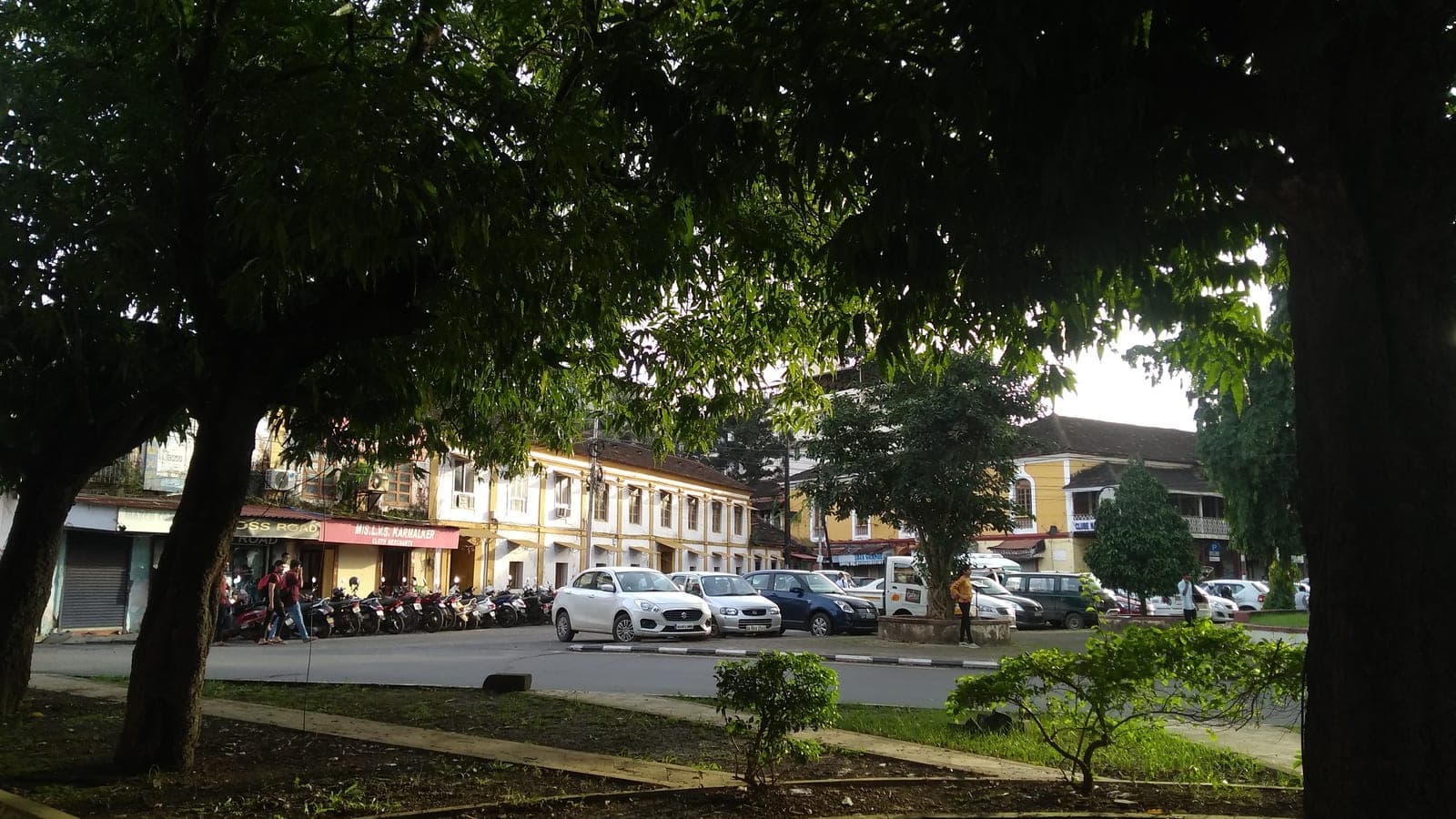
Photo: Frederick Noronha, CC BY-SA 2.0, via Wikimedia Commons
Ask most buyers what RERA does and you will hear a version of "it makes property safe." That is close, but it is not precise enough to protect you. The Real Estate (Regulation and Development) Act, 2016 governs how a project is disclosed, funded, and delivered — but only for projects the law actually requires to be registered. A meaningful share of Goa's most desirable inventory, particularly boutique villa collections, sits legitimately below that threshold. Understanding where the line falls, and what shifts onto your own shoulders when a project is exempt, is the difference between an informed purchase and a hopeful one.
What RERA Is, in Plain Terms
RERA established a state-level authority — in this state, the Goa Real Estate Regulatory Authority (GoaRERA) — that registered projects must answer to. Registration is not a quality award or a government endorsement of the building. It is a disclosure-and-accountability regime: the promoter commits project details, approvals, plans, and delivery timelines to a public record, and accepts a set of statutory obligations toward buyers that are enforceable through the authority. When people say a project is "RERA-approved," what they usually mean is that it is RERA-registered and therefore subject to those obligations.
What Triggers Mandatory Registration in Goa
The registration requirement sits in Section 3 of the Act. A real estate project must be registered where the area of land proposed to be developed exceeds five hundred square metres, or where the number of apartments proposed to be constructed exceeds eight. Conversely, a project is not required to register where the land does not exceed five hundred square metres, or where no more than eight apartments are to be developed, counting all phases of the project together.
The interpretation of that "or" has been litigated and read differently across states, and GoaRERA has issued its own procedural guidance on how it treats registration. The practical takeaway for a buyer is simpler than the legal debate: smaller developments — a handful of units on a compact plot — frequently fall outside the mandatory registration net entirely, and they do so lawfully. That is a feature of how the statute was drawn, not a loophole a developer invented.
What Registration Actually Gives a Buyer
When a project is registered, four protections matter most, and each one is worth understanding on its own terms rather than as a vague reassurance.
- Ring-fenced funds. A defined majority of the money buyers pay must be kept in a separate account earmarked for that project's land and construction, and withdrawn only in proportion to construction progress, with that progress certified by an engineer, an architect, and a chartered accountant. This is what stops a promoter from funnelling your payments into an unrelated project.
- Accountable timelines. The promoter commits to a possession date on the public record. If delivery slips, the buyer has a defined statutory route to recourse rather than an open-ended wait governed only by the sale agreement.
- Carpet-area honesty. Sales must be quoted on carpet area — the net usable floor area within the apartment, excluding external walls, service shafts, and exclusive balcony, verandah, or open-terrace areas, while including the internal partition walls. This ends the older practice of selling on inflated "super built-up" numbers that a buyer could never actually occupy.
- Defect liability. For a defined period after possession — five years under the Act — the promoter is obliged to rectify structural defects and certain other faults, and to do so within a short, statutorily fixed window once notified, at no cost to the buyer.
What Is Exempt — and Why That Is Not a Red Flag
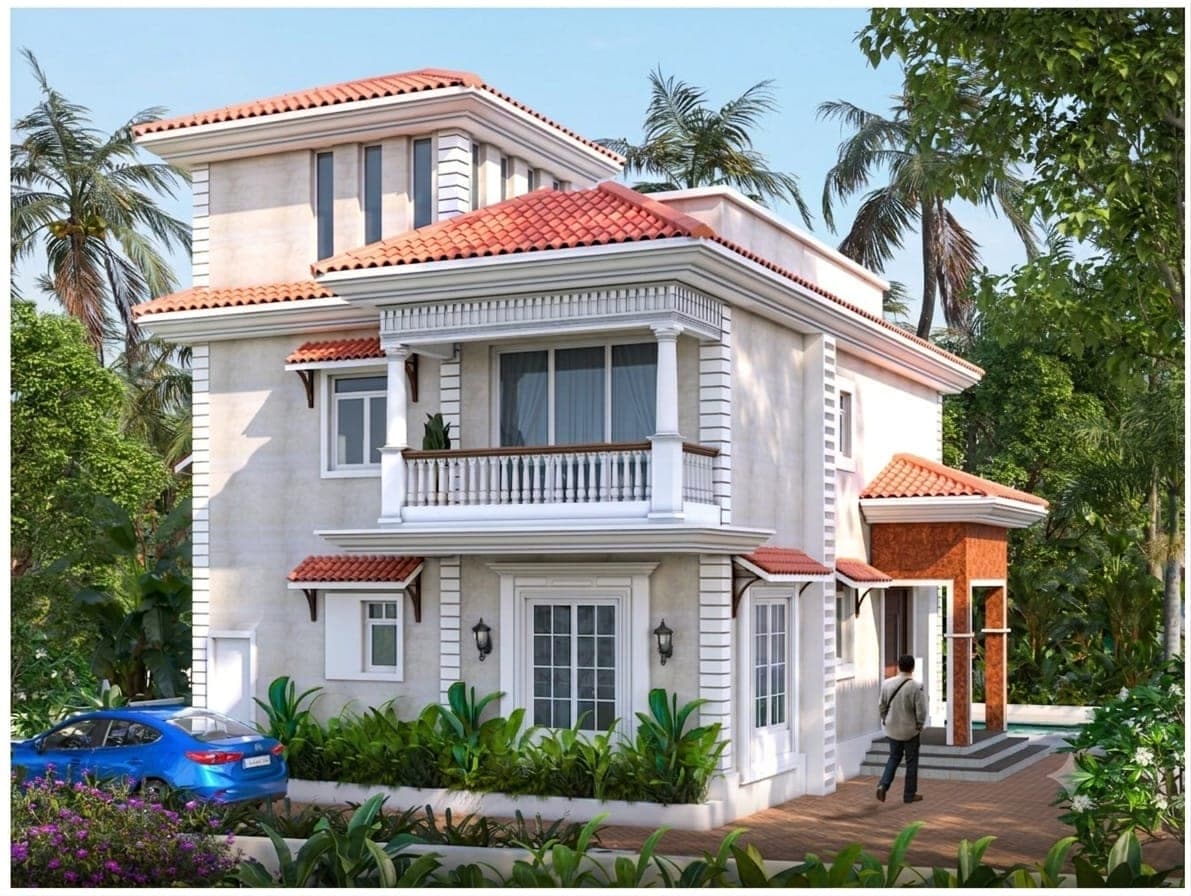
Because the threshold is drawn at compact plot sizes and small unit counts, many of Goa's boutique villa collections and low-density projects are exempt from mandatory registration. Listiing's own IN22612R — a gated collection of six private-pool villas in Betalbatim, South Goa — is a clean example: with six units, it sits below the eight-apartment threshold and is therefore not required to register. That is the ordinary consequence of building something small and low-density, not evidence of anything being hidden.
What the exemption does change is where the burden of proof sits. On a registered project, the statute and the authority carry part of the diligence for you. On an exempt project, that weight shifts to you and your advocate. The land title, the approvals, the construction quality, the delivery commitment, and the defect remedies all still matter just as much — they simply have to be verified privately and written into your agreement, rather than being assumed from a registration number. An exempt project is not a lesser project. It is one where careful buyers earn their protection through diligence instead of inheriting it from a portal.
How to Verify a Project's RERA Status
If a project claims registration, confirm it at the source rather than taking a brochure at its word. GoaRERA maintains a public portal at rera.goa.gov.in where registered projects and agents are listed. Search the registered-projects section by the registration number, the promoter's name, or the location, and confirm that the details on the record — the plans, the approvals, the committed timeline, and the quarterly progress updates — match what you were shown. If a project presents itself as registered but does not appear on the portal, treat that as a question to resolve before any money moves, not a detail to overlook.
A Buyer's Checklist, Registered or Not
Regardless of RERA status, a serious buyer — or the advocate acting for one — should ask for and independently verify the following before committing funds:
- A clear and marketable title, traced back through the chain of ownership, with an independent title search.
- The sanctioned building plan and the relevant construction and occupancy permissions from the local authority.
- Conversion status of the land, where agricultural or other land use is being changed for development.
- For a registered project, the RERA registration number confirmed on the state portal; for an exempt one, a written explanation of why the exemption applies and confirmation that the unit count and plot size support it.
- A sale agreement that fixes the carpet area, the possession date, the payment schedule tied to construction stages, and an explicit defect-rectification obligation — especially important on exempt projects, where these are matters of contract rather than statute.
- Proof that dues, approvals, and any encumbrances are cleared, obtained directly from the relevant offices rather than from the seller's representations alone.
A Note for Buyers
RERA is a strong protection where it applies, and a useful lens even where it does not. The presence of a registration number tells you a project has accepted a set of statutory duties; its absence, on a small low-density development, usually tells you only that the law did not require registration — and that your own diligence now does the work the statute otherwise would. Neither status replaces the fundamentals: clean title, valid approvals, and a well-drafted agreement. If you would like to explore villas and homes across Goa and beyond — including collections that sit below the registration threshold by design — browse the current listings at https://listiing.com/property/ or reach out to the Listiing team, and we will walk you through exactly what to verify on any property that interests you.
Frequently Asked Questions
Is a Goa property unsafe to buy if the project is not RERA-registered?
Not inherently. Many small, low-density developments in Goa are lawfully exempt from mandatory registration because they fall below the statutory threshold. The absence of a registration number simply means the law did not require it — it does not indicate a problem. What it does mean is that the diligence RERA would otherwise carry now falls to you and your advocate, so title, approvals, and the sale agreement must be verified privately and written down carefully.
What triggers mandatory RERA registration in Goa?
Under Section 3 of the Real Estate (Regulation and Development) Act, 2016, a project must be registered where the land to be developed exceeds five hundred square metres, or where more than eight apartments are proposed, counting all phases together. Projects at or below those limits are generally not required to register.
What protections does RERA registration give a buyer?
Registration brings four core protections: a defined majority of buyer payments must be ring-fenced in a separate project account and released only against certified construction progress; possession timelines are committed on the public record with statutory recourse for delay; sales must be quoted on carpet area rather than inflated built-up figures; and the promoter is liable to rectify structural defects for a defined period after possession, five years under the Act.
How do I verify a project's RERA registration in Goa?
Use the official GoaRERA portal at rera.goa.gov.in. Open the registered-projects section and search by the registration number, the promoter's name, or the location, then confirm that the plans, approvals, timeline, and quarterly updates on the record match what you were shown. If a project claims registration but does not appear, resolve that before committing any funds.
What is carpet area under RERA, and why does it matter?
Carpet area is the net usable floor area within an apartment — excluding external walls, service shafts, and exclusive balcony, verandah, or open-terrace areas, while including the internal partition walls. RERA requires sales to be quoted on this basis so buyers pay for space they can actually occupy, rather than on larger built-up figures that include shared and unusable areas.
Why are boutique villa collections in Goa often exempt from RERA?
Because the registration threshold is set at compact plot sizes and small unit counts, low-density projects frequently fall below it. A gated collection of a few villas — for example, a six-villa scheme — sits under the eight-apartment threshold and is therefore not required to register. This is the ordinary result of building something small, not a red flag; it simply means the buyer's own due diligence carries more of the weight.
People also ask
Quick answers on this topic.
- Is a Goa property unsafe to buy if the project is not RERA-registered? +
- Not inherently. Many small, low-density developments in Goa are lawfully exempt from mandatory registration because they fall below the statutory threshold. The absence of a registration number simply means the law did not require it — it does not indicate a problem. What it does mean is that the diligence RERA would otherwise carry now falls to you and your advocate, so title, approvals, and the sale agreement must be verified privately and written down carefully.
- What triggers mandatory RERA registration in Goa? +
- Under Section 3 of the Real Estate (Regulation and Development) Act, 2016, a project must be registered where the land to be developed exceeds five hundred square metres, or where more than eight apartments are proposed, counting all phases together. Projects at or below those limits are generally not required to register.
- What protections does RERA registration give a buyer? +
- Registration brings four core protections: a defined majority of buyer payments must be ring-fenced in a separate project account and released only against certified construction progress; possession timelines are committed on the public record with statutory recourse for delay; sales must be quoted on carpet area rather than inflated built-up figures; and the promoter is liable to rectify structural defects for a defined period after possession, five years under the Act.
- How do I verify a project's RERA registration in Goa? +
- Use the official GoaRERA portal at rera.goa.gov.in. Open the registered-projects section and search by the registration number, the promoter's name, or the location, then confirm that the plans, approvals, timeline, and quarterly updates on the record match what you were shown. If a project claims registration but does not appear, resolve that before committing any funds.
- What is carpet area under RERA, and why does it matter? +
- Carpet area is the net usable floor area within an apartment — excluding external walls, service shafts, and exclusive balcony, verandah, or open-terrace areas, while including the internal partition walls. RERA requires sales to be quoted on this basis so buyers pay for space they can actually occupy, rather than on larger built-up figures that include shared and unusable areas.
- Why are boutique villa collections in Goa often exempt from RERA? +
- Because the registration threshold is set at compact plot sizes and small unit counts, low-density projects frequently fall below it. A gated collection of a few villas — for example, a six-villa scheme — sits under the eight-apartment threshold and is therefore not required to register. This is the ordinary result of building something small, not a red flag; it simply means the buyer's own due diligence carries more of the weight.
Have a question?
Talk to us about what you read.
If this piece raised questions about a specific property or corridor, drop us a line. Short, honest replies — that's all we do.
More in Buying Guide